FACE TO SHOULDERS
Eight areas. One clear map.
See where to practise and find the relevant methods through an interactive region map, without searching through long passages.
GENDOKAN SELECT / FACE · NECK · SHOULDERS · VOICE
Yanlu8FACE & VOICE PRACTICE
From releasing tension to exploring control. A structured practice connecting your face, neck and shoulders—with guidance you can return to.
Tax included · one-time purchase · no auto-renewal
Price published · checkout is not yet openBrowse the directory and excerpts without signing in
WHY YANLU8
Bring scattered techniques together in a toolkit you can use again and again.
FACE TO SHOULDERS
See where to practise and find the relevant methods through an interactive region map, without searching through long passages.
MOVEMENT TO EXPRESSION
Vowels, rhythm and natural speech help you explore how cheeks, lips, tongue, jaw and neck move together.
KNOWING TO DOING
Start with about eight minutes. Use location diagrams, timers, common-error checks and easier options at your own pace.
YOUR DAILY RHYTHM
Begin with the daily entry, then choose a route by area or goal. The eight-week plan provides a sequence—not a deadline for results.
Check the starting position
Follow the guide and pace
Notice effort and compensation
Simplify or progress
OPEN PREVIEW
Explore the public directory and excerpts below. Full teaching cards and practice tools are purchased content. Checkout is not currently open.
Two lessons from the published introductory guide. No sign-in needed: explore the illustration and practise at your own pace.
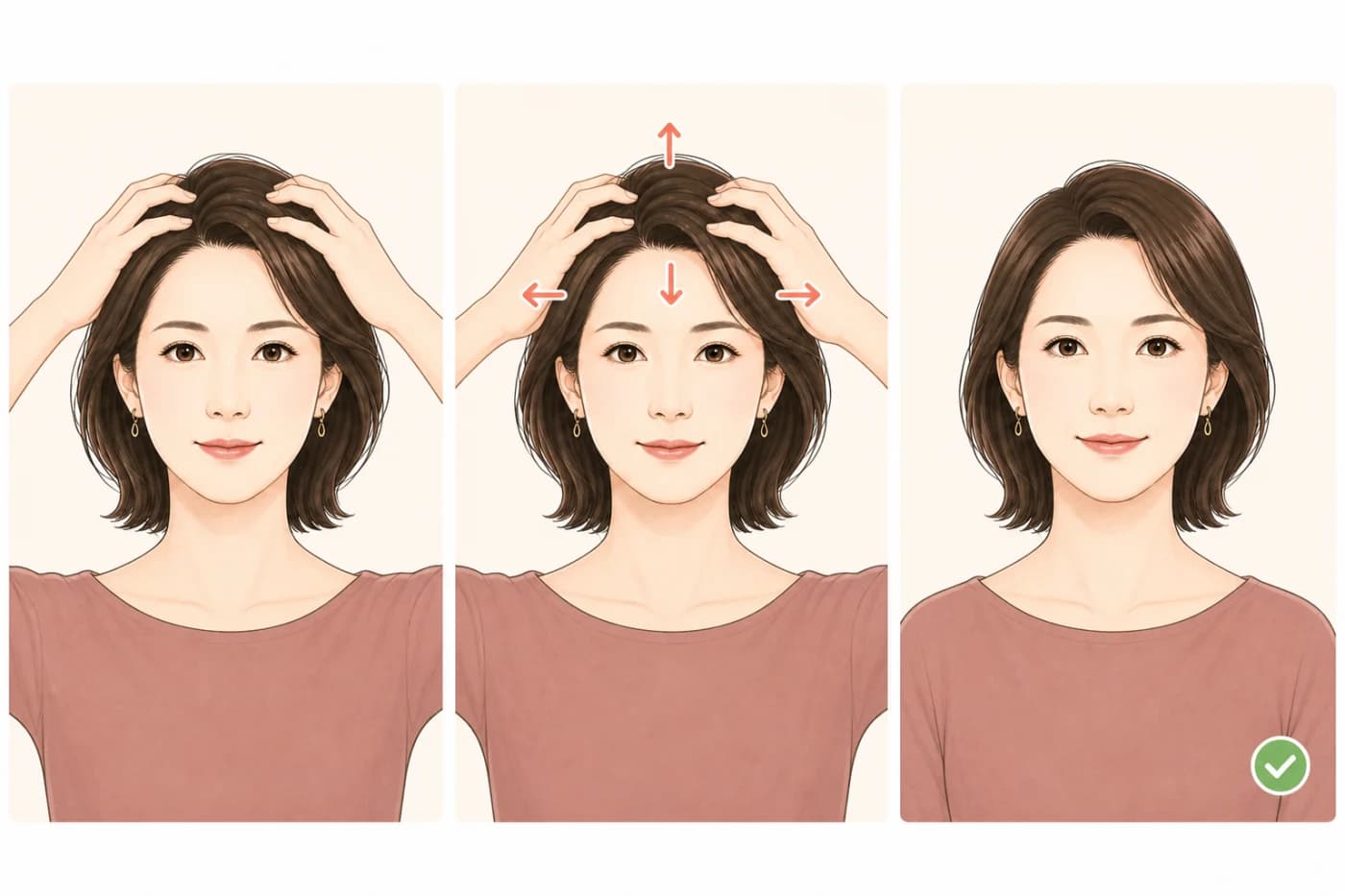
Before you beginDo not rub hard. Skip this practice if your scalp has wounds or inflammation.
Place clean finger pads lightly on your scalp near the hairline. Do not use your nails. Relax your shoulders and jaw.
What to noticeLook for your scalp moving with your fingers, rather than pulling your hair.
See the complete structure before purchase
Choose a highlighted face, neck, or shoulder area to preview its four methods. The public page shows the directory; location, pressure, dose, corrections, timers, and rechecks open in the purchased manual.
Selected area
Restore scalp glide and reduce persistent pulling across the forehead, glabella, and occiput.
Voice-Motor Integration
Vowels, lip trills, tongue clicks, four-syllable rhythm, and natural speech bring cheek, lip, jaw, tongue, and neck control back into real expression.
Keep an outward-upward cheek path while the vowel changes open the jaw; fingertip feedback checks that the masseter does not take over.
Switch cleanly between an outward-upward smile and a gentle rounded lip shape while the jaw stays stable.
Use continuous lip vibration as feedback for lip, jaw, and airflow coordination—not as a forceful beatbox burst.
Use broad suction and a clear click to locate the palate, add isometric pressure, then return to a low-effort resting position.
Use four contact locations to train the lips, tongue tip, tongue back, and continuous syllable switching; compare only with your own baseline.
Carry mouth-corner, jaw, tongue-rest, and neck control into real speech, then remove conscious control for a natural recheck.